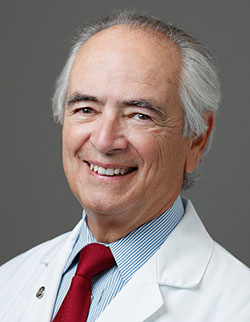
Richard S. Bockman, MD, PhD – Internal Medicine, Endocrinology and Metabolic Bone Physician
The major objective of the Dr. Bockman’s research is to elucidate the pathogenesis and genetic basis of metabolic bone diseases, including osteoporosis, and to develop new therapies for treating these diseases.
Current clinical research is being conducted through four active protocols at the Weill-Cornell Clinical Translational Science Center (CTSC) with former HSS – Endocrine Fellow, Dr. Naina Sinha (now Assistant Attending Physician at NYPH), and with former WMC-Fellow, Dr. Emily Stein. Please note that Dr. Bockman served as the mentor for Dr. Stein, who was awarded an NIH-sponsored CREFF award to carry out her research, and was the first to receive a Cornell ‘Masters Degree in Clinical Research’ awarded through the WMC-CTSC.
In one on-going prospective CTSC-study, alterations in bone metabolism are studied in morbidly and super obese patients being evaluated for Roux-en-Y gastric bypass or biliopancreatic diversion with duodenal switch. At baseline and at various time points over 18 months post-operatively markers of bone turnover, calcitropic hormones and changes in bone density are followed. We specifically obtain anthropomorphic measurements, calcium, vit D and total caloric intake, serum calcium, 25-hydroxy vit D (25-OH VitD), intact PTH and urinary calcium, markers of bone formation, osteocalcin (OC) and bone-specific alkaline phosphatase (BSAP), and bone resorption, urine N-telopeptide (u-NTx) along with bone mineral density assessed by heel ultrasound, since the weight limit for standard densitometry is 300 pounds.
In the second CTSC study, we have initiated a clinical trial examining the efficacy of two regimens to replace vitamin D in D-deficient bariatric subjects.
The third CTSC study examines the role of potassium citrate in preserving bone mass in osteopenic, post-menopausal women.
A fourth CTSC study studies vitamin D status in the W-CIMA patient population with regards to their response to bisphosphonate therapies.
Basic research has examined the following topics:
Gallium Nitrate: Transient and stably transfected osteoblasts have been used to study the effects of gallium, a unique transitional element on the expression of specific matrix genes. Various aspects of cell-signaling that can lead to alterations in bone-matrix gene expression have been studied. Such studies can provide the scientific rationale for the development of clinical protocols measuring the ability of gallium to prevent and treat osteoporosis.
Cell and Molecular Regulation of Collagenase Gene Expression: Cell mediated damage to the major matrix components of connective tissues is an early and critical step in the pathogenesis of destructive arthritic diseases. Type I collagen is the major organic component of bone. In order to develop new therapeutic strategies for preserving and protecting connective tissue, a better understanding of the cellular controls on the degradation and synthesis of the key matrix components is required.
Genetics of Osteoporosis and Fragility fractures: While it is generally acknowledged that many of the factors that determine bone strength are genetically determined, little is known about which genes determine bone strength or how those genes might be affected by epistatic interactions. Recent studies with Dr. R. Blank in a recombinant-congenic mouse model (HcB/Dem) have demonstrated quantitative trait loci (QTLs) for failure load, a measure of a bone’s overall strength. Moreover, by mapping QTLs for a variety of bone phenotypes in this system, we have shown that the relevant QTLs are often pleiotropic, each affecting distinct subsets of independently measured phenotypes: diaphyseal diameter, structural stiffness, ash percentage, and body mass. The mapping data, therefore, allow prediction of the general mechanisms as well as the locations by which the identified QTLs affect bone strength.
Clinical Trials / Research Studies
link