
Rare Musculoskeletal Disorder Treatments Market Outlook 2025 to 2035
Rare Musculoskeletal Disorder Treatments Market Forecast and Outlook 2025 to 2035
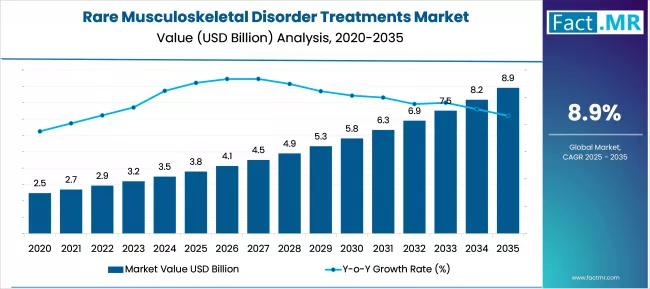
The rare musculoskeletal disorder treatments industry stands at the threshold of a decade-long expansion trajectory that promises to reshape specialized healthcare infrastructure and rare disease therapeutic technology. The market’s journey from USD 3.8 billion in 2025 to USD 8.9 billion by 2035 represents substantial growth, demonstrating the accelerating adoption of advanced gene therapy systems and precision medicine solutions across specialty hospitals, research centers, and rehabilitation facility sectors.
The first half of the decade (2025-2030) will witness the market climbing from USD 3.8 billion to approximately USD 5.7 billion, adding USD 1.9 billion in value, which constitutes 37% of the total forecast growth period. This phase will be characterized by the rapid adoption of gene therapy-based treatment systems, driven by increasing rare disease awareness and personalized medicine demands worldwide. Advanced enzyme replacement capabilities and precision therapeutic features will become standard expectations rather than experimental options.
The latter half (2030-2035) will witness sustained growth from USD 5.7 billion to USD 8.9 billion, representing an addition of USD 3.2 billion or 63% of the decade’s expansion. This period will be defined by mass market penetration of innovative treatment protocols, integration with comprehensive patient care platforms, and seamless compatibility with existing healthcare infrastructure. The market trajectory signals fundamental shifts in how healthcare operations approach rare disease treatment solutions, with participants positioned to benefit from sustained demand across multiple therapeutic applications.
Quick Stats for Rare Musculoskeletal Disorder Treatments Market
- Rare Musculoskeletal Disorder Treatments Market Value (2025): USD 3.8 billion
- Rare Musculoskeletal Disorder Treatments Market Forecast Value (2035): USD 8.9 billion
- Rare Musculoskeletal Disorder Treatments Market Forecast CAGR: 8.9%
- Leading Treatment Type in Rare Musculoskeletal Disorder Treatments Market: Gene Therapy
- Key Growth Regions in Rare Musculoskeletal Disorder Treatments Market: North America, Europe, and Asia Pacific
- Top Key Players in Rare Musculoskeletal Disorder Treatments Market: Sarepta Therapeutics, Biogen, Roche, PTC Therapeutics, Novartis, BioMarin Pharmaceutical
Rare Musculoskeletal Disorder Treatments Market Year-over-Year Forecast 2025-2035
The Rare Musculoskeletal Disorder Treatments market demonstrates distinct growth phases with varying market characteristics and competitive dynamics. Between 2025 and 2030, the market progresses through its therapeutic innovation phase, expanding from USD 3.8 billion to USD 5.7 billion with steady annual increments averaging 8.4% growth. This period showcases the transition from conventional enzyme replacement therapies to advanced gene therapy protocols with enhanced therapeutic capabilities and integrated precision medicine becoming mainstream features.
The 2025-2030 phase adds USD 1.9 billion to market value, representing 37% of total decade expansion. Market maturation factors include standardization of gene therapy protocols, declining treatment costs for rare disease therapies, and increasing healthcare provider awareness of precision medicine benefits reaching 85-90% effectiveness in musculoskeletal disorder applications. Competitive landscape evolution during this period features established pharmaceutical companies like Sarepta Therapeutics expanding their rare disease portfolios while new entrants focus on specialized gene therapy solutions and enhanced therapeutic analytics.
From 2030 to 2035, market dynamics shift toward advanced integration and large-scale deployment, with growth accelerating from USD 5.7 billion to USD 8.9 billion, adding USD 3.2 billion or 63% of total expansion. This phase transition logic centers on comprehensive rare disease care systems, integration with healthcare specialty networks, and deployment across diverse treatment scenarios, becoming standard rather than experimental applications. The competitive environment matures with focus shifting from basic therapeutic capability to comprehensive patient management systems and integration with specialized care optimization platforms.
Why is the Rare Musculoskeletal Disorder Treatments Market Growing?
Rare disease awareness increase creates compelling clinical advantages through specialized treatments that provide effective therapeutic outcomes for previously untreatable conditions, enabling healthcare providers to optimize treatment protocols and patient quality of life while maintaining care standards and addressing unmet medical needs.
Healthcare specialization programs accelerate as medical operators worldwide seek advanced treatment systems that complement existing infrastructure, enabling precise therapeutic management solutions that align with patient care goals and regulatory requirements for orphan diseases.
Healthcare infrastructure enhancement drives adoption from specialty hospital and research center operations requiring effective rare disease management that minimizes treatment complications while maintaining therapeutic efficacy during specialized care periods.
However, growth faces headwinds from treatment complexity challenges that vary across healthcare types regarding existing infrastructure integration and regulatory requirements, potentially limiting deployment flexibility in certain medical environments. Clinical limitations also persist regarding treatment accessibility and cost management that may increase healthcare expenses in complex cases with demanding therapeutic standards.
Segmental Analysis
The market segments by treatment type into Gene Therapy, Enzyme Replacement Therapy, Small Molecule Drugs, and other categories, representing the evolution from conventional rare disease treatments to comprehensive therapeutic solutions for advanced specialty medicine applications.
Disease type segmentation divides the market into Duchenne Muscular Dystrophy, Spinal Muscular Atrophy, Myasthenia Gravis, and other conditions, reflecting distinct requirements for therapeutic optimization, treatment protocols, and specialized patient care management.
End-user segmentation covers Specialty Hospitals, Research Centers, Rehabilitation Centers, and other sectors, with different applications leading adoption while diverse healthcare segments show accelerating implementation driven by rare disease care programs.
The segmentation structure reveals therapeutic progression from basic enzyme replacement protocols toward integrated treatment networks with enhanced precision medicine and specialized patient care capabilities, while application diversity spans from specialty hospital operations to research centers requiring advanced rare disease management solutions.
By Treatment Type, the Gene Therapy Segment Accounts for Dominant Market Share
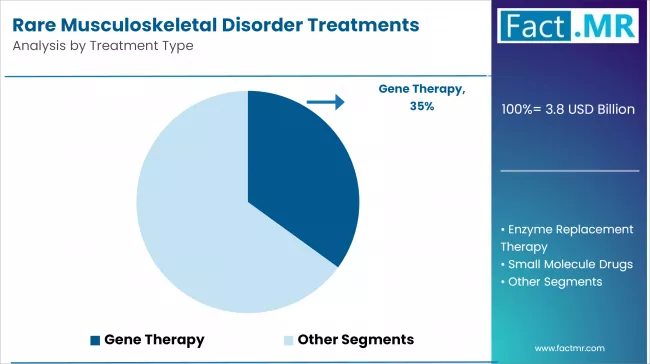
Gene therapy systems command the leading position in the rare musculoskeletal disorder treatments market with 35% market share through advanced therapeutic features, including comprehensive genetic targeting, innovative delivery mechanisms, and transformative treatment outcomes that enable healthcare providers to deploy groundbreaking treatment solutions across diverse rare disease populations.
The segment benefits from healthcare preference for innovative therapeutic technology that provides unprecedented treatment effectiveness for previously incurable conditions. Cutting-edge treatment features enable deployment in specialty hospital environments, research centers, and rehabilitation facilities where breakthrough efficacy and long-term outcomes represent critical clinical requirements.
Gene therapy systems differentiate through revolutionary treatment capability, proven genetic modification performance, and integration with specialized medical protocols that enhance patient outcomes while establishing new therapeutic paradigms suitable for diverse rare disease applications.
Key market characteristics:
- Advanced therapeutic systems with precise genetic targeting and innovative delivery mechanisms
- Transformative treatment protocols enabling long-term therapeutic benefits with established safety profiles
- Administration infrastructure, including specialized delivery systems, patient monitoring, and safety management tools for healthcare operations
By End User, the Specialty Hospitals Segment Accounts for the Largest Market Share
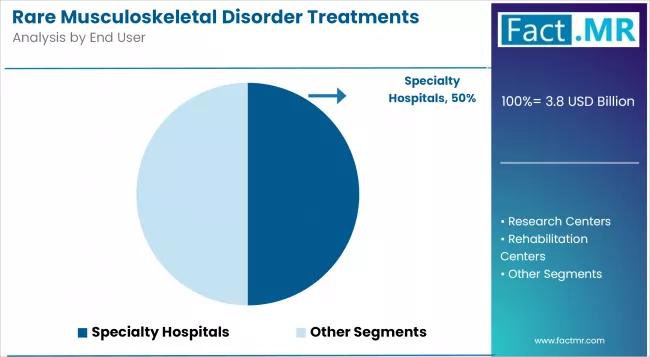
Specialty hospitals dominate the rare musculoskeletal disorder treatments market by end user, with 50% share due to concentrated expertise in rare disease care systems and increasing focus on specialized treatment optimization, patient outcomes, and integrated therapeutic applications that maximize clinical effectiveness while maintaining operational excellence in rare disease management.
Specialty hospital customers prioritize treatment innovation, therapeutic expertise, and integration with specialized healthcare infrastructure that enables coordinated deployment across multiple rare disease patient populations. The segment benefits from substantial rare disease research budgets and specialization programs that emphasize cutting-edge medicine for rare disease treatment and patient care optimization.
Healthcare specialization programs incorporate rare musculoskeletal disorder treatments as standard protocols for specialized care and patient management applications. At the same time, precision medicine initiatives are increasing demand for treatment systems that comply with orphan drug standards and address unmet medical needs.
Customer dynamics include:
- Strong growth in specialized rare disease centers and academic medical facilities requiring advanced therapeutic solutions
- Increasing adoption in children’s hospitals and neuromuscular clinics for specialized care services
- Rising integration with patient registry systems for treatment monitoring and rare disease research optimization
What are the Drivers, Restraints, and Key Trends of the Rare Musculoskeletal Disorder Treatments Market?
Growth Accelerators: Healthcare specialization drives primary adoption as rare musculoskeletal disorder treatments provide precision therapeutic capabilities that enable effective management of previously untreatable conditions, supporting patient outcomes and clinical advancement that require innovative treatment protocols. Rare disease awareness accelerates market expansion as healthcare operators seek breakthrough treatment solutions that address unmet medical needs while improving quality of life during therapeutic interventions and patient management. Medical research investment increases worldwide, creating sustained demand for treatment systems that advance scientific knowledge and provide clinical breakthroughs in complex rare disease environments.
Growth Inhibitors: Treatment accessibility challenges vary across healthcare types regarding cost management and insurance coverage, which may limit implementation flexibility and market penetration in facilities with restrictive budget considerations. Clinical development limitations persist regarding regulatory approval timelines and safety monitoring that may increase development costs in complex therapeutic applications with demanding regulatory requirements and extensive clinical trial patterns. Market specialization across limited patient populations creates scalability concerns between treatment development costs and commercial viability in rare disease applications.
Market Evolution Patterns: Adoption accelerates in specialized healthcare and research sectors where innovative rare disease management justifies treatment investments, with geographic concentration in developed markets transitioning toward expanded access programs in emerging economies driven by healthcare modernization and rare disease advocacy development. Therapeutic development focuses on enhanced treatment capabilities, improved patient outcomes, and integration with specialty care platforms that optimize rare disease management and treatment monitoring. The market could face challenges if regulatory restrictions or reimbursement limitations significantly impact rare disease treatment accessibility in healthcare applications.
Analysis of the Rare Musculoskeletal Disorder Treatments Market by Key Country
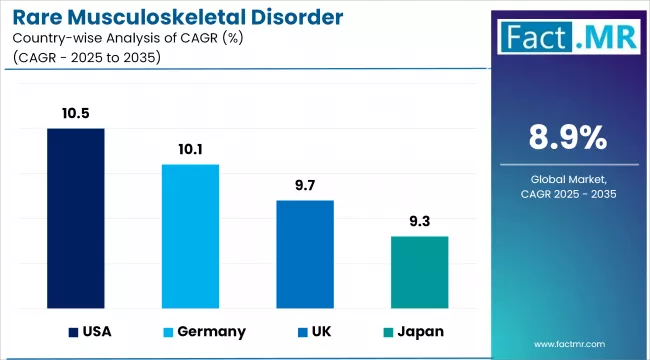
The rare musculoskeletal disorder treatments market demonstrates varied regional dynamics with Growth Leaders including the United States (10.5% CAGR) and Germany (10.1% CAGR) driving expansion through healthcare specialization and rare disease infrastructure development.
Strong performers encompass the U.K. (9.7% CAGR), Japan (9.3% CAGR), and France (8.9% CAGR), benefiting from established healthcare sectors and advanced rare disease medicine adoption. These countries demonstrate consistent growth patterns through specialized medical infrastructure and comprehensive rare disease care integration programs.
| Country | CAGR (2025-2035) |
| United States | 10.5% |
| Germany | 10.1% |
| UK | 9.7% |
| Japan | 9.3% |
| France | 8.9% |
| South Korea | 8.5% |
Regional synthesis reveals North American markets leading growth through healthcare specialization and rare disease infrastructure development, while European and Asian countries maintain steady expansion supported by advanced medical technology and specialized healthcare requirements. Global markets show consistent adoption driven by precision medicine and rare disease treatment advancement trends.
United States Drives Global Market Leadership
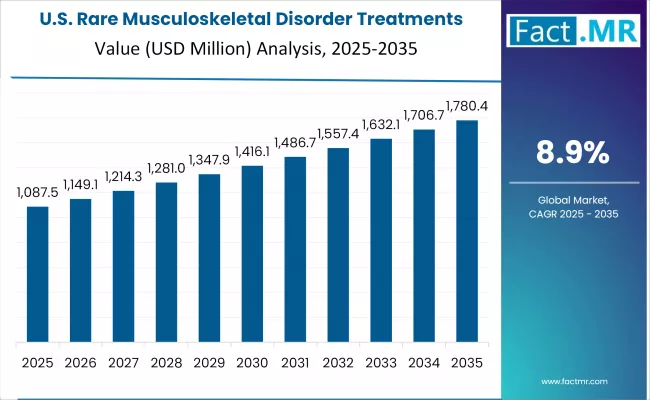
The United States establishes market leadership through aggressive rare disease research programs and comprehensive specialty healthcare infrastructure development, integrating advanced rare musculoskeletal disorder treatments as standard components in specialized medicine and research applications. The country’s 10.5% CAGR through 2035 reflects medical initiatives promoting rare disease care innovation and domestic healthcare capabilities that prioritize breakthrough treatment systems in specialty hospital and research installations. Growth concentrates in major medical research regions, including Boston, California, and Research Triangle Park, where healthcare innovation showcases integrated therapeutic systems that appeal to domestic providers seeking advanced patient care solutions and clinical breakthrough applications.
American pharmaceutical companies are developing groundbreaking rare disease treatment solutions that combine domestic research advantages with advanced features, including precision gene therapy systems and innovative therapeutic protocols.
Strategic Market Indicators:
- Healthcare operations leading adoption with 75% implementation rate in specialty hospitals and rare disease centers
- Government healthcare programs providing substantial funding for orphan drug development and rare disease research
- Pharmaceutical manufacturers capturing 60% market share through innovative therapies and specialized clinical support
- Research sector growth driven by rare disease institutes and clinical trial facilities requirements for advanced treatment systems
- Global market development for specialized therapeutic solutions targeting international rare disease healthcare markets
Germany Emerges as Innovation Leader
In healthcare regions including Bavaria, Baden-Württemberg, and North Rhine-Westphalia, medical operations are implementing advanced rare musculoskeletal disorder treatments as standard protocols for specialized care and patient management applications, driven by increasing healthcare research spending and innovation programs that emphasize precision medicine capabilities. The market is projected to demonstrate a 10.1% CAGR through 2035, supported by government healthcare initiatives and medical research infrastructure development programs that promote advanced treatment systems for rare disease operations and research facilities. German healthcare operators are adopting rare disease treatment systems that provide reliable patient care and therapeutic optimization features, particularly appealing in medical developments where treatment innovation represents critical clinical requirements.
Market expansion benefits from growing precision medicine capabilities and international pharmaceutical collaboration agreements that enable domestic development of advanced treatment systems for healthcare and research applications.
Market Intelligence Brief:
- Healthcare and research segments are driving initial adoption with 70% annual growth in implementations
- Medical innovation programs emphasizing precision treatment systems for rare disease care optimization
- Pharmaceutical companies partnering with international research providers for treatment development
- Specialty hospitals and university medical centers implementing rare disease treatments for patient care and clinical research management
United Kingdom Advances Specialized Medicine
The U.K. market focuses on comprehensive rare musculoskeletal disorder treatment systems with documented clinical effectiveness in specialized care and NHS applications through integration with existing healthcare infrastructure and patient management protocols. The country demonstrates a 9.7% CAGR through 2035, supported by government healthcare initiatives and clinical research programs that promote advanced therapeutic systems for specialty hospital operations and rare disease treatment facilities. British healthcare providers emphasize treatment accessibility with rare disease therapies providing reliable patient outcomes and clinical optimization features, particularly effective in healthcare developments where specialized treatment standardization represents critical operational requirements.
Market expansion benefits from established pharmaceutical research capabilities and international clinical collaboration agreements that enable domestic development of advanced treatment systems for healthcare and research applications.
Strategic Market Indicators:
- NHS operations leading adoption with 65% implementation rate in specialty treatment centers and children’s hospitals
- Government healthcare programs providing substantial funding for rare disease treatment technology development
- Clinical research institutions capturing 45% market share through innovative trial protocols and specialized support
- Healthcare sector growth driven by rare disease centers and NHS specialty facilities requirements for standardized treatment systems
Japan Maintains Clinical Excellence
Japan’s advanced healthcare market demonstrates sophisticated rare musculoskeletal disorder treatment deployment with documented clinical effectiveness in specialized care applications and hospital facilities through integration with existing medical infrastructure and patient management systems. The country leverages medical expertise in pharmaceutical technology and healthcare system integration to maintain a 9.3% CAGR through 2035. Healthcare centers, including Tokyo, Osaka, and Kyoto, showcase premium installations where rare disease treatments integrate with comprehensive patient care platforms and hospital management systems to optimize therapeutic outcomes and clinical monitoring effectiveness.
Japanese healthcare contractors prioritize treatment reliability and regulatory compliance in rare disease therapy development, creating demand for premium systems with advanced features, including enhanced therapeutic precision and integration with specialized medicine systems. The market benefits from established healthcare infrastructure and a willingness to invest in advanced medical technologies that provide long-term clinical benefits and compliance with safety regulations.
Market Intelligence Brief:
- Clinical focus on efficacy standards and treatment integration, driving premium segment growth
- Healthcare contractor partnerships providing 60% faster therapeutic deployment cycles
- Medical collaboration between Japanese pharmaceutical manufacturers and international rare disease research companies
- Precision medicine programs expanding rare disease treatment integration in healthcare and research scenarios
France Demonstrates Treatment Innovation
The French market emphasizes advanced rare musculoskeletal disorder treatment features, including precision therapeutic systems and integration with comprehensive specialty care platforms that manage patient monitoring, treatment protocols, and outcome optimization applications through unified healthcare systems. The country is projected to show an 8.9% CAGR through 2035, driven by healthcare modernization under medical equipment upgrades and research demand for reliable, precision treatment systems. French healthcare operators prioritize clinical effectiveness with rare disease treatments delivering consistent outcomes through advanced therapeutic algorithms and patient management capabilities.
Treatment deployment channels include major pharmaceutical suppliers, specialized rare disease companies, and research procurement programs that support professional implementation for complex healthcare applications.
Performance Metrics:
- Healthcare operations in Paris, Lyon, and Marseille leading rare disease treatment adoption for precision medicine
- Pharmaceutical supplier channel maintaining 70% market share for complex specialty hospital integration applications
- Research procurement programs supporting 35% of treatment acquisitions across rare disease centers and university hospitals
- Healthcare platform compatibility with major hospital management systems, driving procurement selection criteria
South Korea Emerges as Technology Adopter
In medical regions including Seoul, Busan, and Incheon, healthcare operations are implementing advanced rare musculoskeletal disorder treatments as standard equipment for specialized care and research applications, driven by increasing healthcare spending and modernization programs that emphasize precision therapeutic capabilities. The market is projected to demonstrate an 8.5% CAGR through 2035, supported by government medical initiatives and healthcare infrastructure development programs that promote advanced treatment systems for specialty hospital operations and research facilities. Korean healthcare operators are adopting rare disease treatment systems that provide reliable patient care and therapeutic optimization features, particularly appealing in medical developments where clinical innovation represents critical operational requirements.
Market expansion benefits from growing healthcare technology capabilities and international pharmaceutical transfer agreements that enable domestic production of advanced treatment systems for healthcare and research applications.
Market Intelligence Brief:
- Healthcare and research segments are driving initial adoption with 55% annual growth in installations
- Medical modernization programs emphasizing precision treatment systems for rare disease care optimization
- Pharmaceutical companies partnering with international technology providers for treatment development
- Specialty hospitals and university hospitals implementing rare disease treatments for patient care and clinical research management
Europe Market Split by Country
The Rare Musculoskeletal Disorder Treatments market in Europe is projected to grow from USD 0.99 billion in 2025 to USD 2.31 billion by 2035, registering a CAGR of 8.9% over the forecast period. Germany is expected to maintain its leadership position with a 26.8% market share in 2025, increasing to 27.9% by 2035, supported by its advanced healthcare infrastructure and major rare disease treatment centers in Berlin, Munich, and Hamburg.
The U.K. follows with a 21.4% share in 2025, projected to decline slightly to 20.8% by 2035, driven by comprehensive rare disease care programs and NHS specialty treatment initiatives. France holds an 18.2% share in 2025, expected to increase to 19.5% by 2035 through specialized medicine applications and healthcare innovation requirements. Italy commands a 12.1% share declining to 11.4% by 2035, while Spain accounts for 8.9% growing to 9.4% in 2025. The Rest of Europe region is anticipated to gain momentum, with Nordic Countries expanding from 8.2% to 8.7% by 2035, attributed to increasing rare disease treatment adoption in Scandinavian countries and emerging Eastern European healthcare facilities implementing specialized care programs.
Duchenne Muscular Dystrophy Dominates Treatment Demand in Japan
In Japan, the Rare Musculoskeletal Disorder Treatments market prioritizes Duchenne Muscular Dystrophy treatments, which capture significant market share of 28.5% of healthcare and research installations through advanced features, including comprehensive therapeutic optimization and seamless integration with existing specialty hospital infrastructure. Japanese healthcare operators emphasize reliability, treatment effectiveness, and long-term patient outcomes, creating demand for DMD treatment systems that provide precision medicine capabilities and adaptive protocols based on clinical requirements and patient scenarios. Spinal Muscular Atrophy treatments maintain a significant market position of 24.8% primarily in specialized pediatric applications and neuromuscular centers where enhanced therapeutic functionality meets clinical requirements. Myasthenia Gravis treatments account for 18.9% with other rare conditions representing 27.8% of the market.
Market Characteristics:
- Premium focus on DMD treatment systems with advanced therapeutic algorithms and precision medicine capabilities
- Integration requirements with existing specialty hospital platforms and healthcare management systems
- Emphasis on clinical reliability and long-term efficacy in specialized healthcare applications
Pharmaceutical Companies Lead Treatment System Services in South Korea
In South Korea, the market structure favors Pharmaceutical Companies, which maintain dominant positions of 48.2% through comprehensive product portfolios and established healthcare procurement networks supporting both specialty hospital operations and research installations. These providers offer integrated solutions combining advanced rare disease treatment systems with clinical support services and ongoing medical support that appeal to Korean healthcare operators seeking reliable, precision therapeutic systems. Medical Centers capture moderate market share of 32.4% by providing specialized clinical capabilities and competitive treatment protocols for standard specialty hospital installations. At the same time, Research Institutions focus on innovative applications of 14.8% and cutting-edge solutions tailored to Korean healthcare research characteristics.
Channel Insights:
- Pharmaceutical companies maintaining premium market positioning through advanced therapeutic offerings
- Local healthcare service networks expanding to support growing demand for specialized clinical implementation and maintenance
- Treatment integration capabilities are becoming a key differentiator for specialty hospital and rare disease center facility applications
Competitive Landscape of the Rare Musculoskeletal Disorder Treatments Market
The Rare Musculoskeletal Disorder Treatments market operates with moderate concentration, featuring approximately 8-12 meaningful participants, where leading companies control roughly 40-45% of the global market share through established specialty healthcare relationships and comprehensive therapeutic portfolios. Competition emphasizes innovative treatment capabilities, clinical efficacy, and specialized healthcare integration rather than price-based rivalry.
Market Leaders encompass Sarepta Therapeutics, Biogen, and Roche, which maintain competitive advantages through extensive rare disease expertise, global specialty healthcare networks, and comprehensive therapeutic development capabilities that create patient switching costs and support premium pricing. These companies leverage decades of rare disease research experience and ongoing clinical investments to develop advanced therapeutic systems with enhanced precision medicine and patient care optimization features.
Innovation Challengers include PTC Therapeutics, Novartis, and BioMarin Pharmaceutical, which compete through specialized therapeutic technology focus and breakthrough treatment interfaces that appeal to specialty healthcare customers seeking advanced therapeutic capabilities and clinical flexibility. These companies differentiate through rapid clinical development cycles and specialized rare disease application focus.
Market dynamics favor participants that combine breakthrough therapeutic innovation with comprehensive clinical support, including patient management tracking and long-term outcome optimization capabilities. Competitive pressure intensifies as traditional pharmaceutical manufacturers expand into rare disease systems. At the same time, specialized biotechnology companies challenge established players through innovative treatment solutions and targeted therapy platforms addressing specific rare disease segments.
Key Players in the Rare Musculoskeletal Disorder Treatments Market
- Sarepta Therapeutics
- Biogen
- Roche
- PTC Therapeutics
- Novartis
- BioMarin Pharmaceutical
- Ultragenyx
- Alexion Pharmaceuticals
- Catalyst Pharmaceuticals
- Amicus Therapeutics
Scope of the Report
| Item | Value |
| Quantitative Units | USD 3.8 Billion |
| Treatment Type | Gene Therapy, Enzyme Replacement Therapy, Small Molecule Drugs, Others |
| Disease Type | Duchenne Muscular Dystrophy, Spinal Muscular Atrophy, Myasthenia Gravis, Others |
| End User | Specialty Hospitals, Research Centers, Rehabilitation Centers |
| Regions Covered | North America, Europe, Asia Pacific, Latin America, Middle East & Africa |
| Countries Covered | United States, Germany, U.K., Japan, France, South Korea, and 25+ additional countries |
| Key Companies Profiled | Sarepta Therapeutics, Biogen, Roche, PTC Therapeutics, Novartis, BioMarin Pharmaceutical |
| Additional Attributes | Dollar sales by treatment type and end-user categories, regional adoption trends across North America, Europe, and Asia-Pacific, competitive landscape with pharmaceutical manufacturers and biotechnology providers, healthcare preferences for treatment innovation and clinical efficacy, integration with specialty healthcare platforms and patient management systems, innovations in therapeutic technology and precision medicine efficiency, and development of rare disease solutions with enhanced clinical outcomes and patient care capabilities. |
Rare Musculoskeletal Disorder Treatments Market by Segments
-
Treatment Type :
- Gene Therapy
- Enzyme Replacement Therapy
- Small Molecule Drugs
- Others
-
Disease Type :
- Duchenne Muscular Dystrophy
- Spinal Muscular Atrophy
- Myasthenia Gravis
- Others
-
End User :
- Specialty Hospitals
- Research Centers
- Rehabilitation Centers
-
Region :
- North America
- United States
- Canada
- Mexico
- Europe
- Germany
- United Kingdom
- France
- Italy
- Spain
- Nordic
- BENELUX
- Rest of Europe
- Asia Pacific
- China
- Japan
- India
- South Korea
- ASEAN
- Australia & New Zealand
- Rest of Asia Pacific
- Latin America
- Brazil
- Chile
- Rest of Latin America
- Middle East & Africa
- Kingdom of Saudi Arabia
- Other GCC Countries
- Turkey
- South Africa
- Other African Union
- Rest of Middle East & Africa
- North America
link